
State Media in Central America: Control by Default, Independence by Institution
Across seven countries, State Media Monitor maps 35 state media entries. A total of 26 of them, roughly three quarters, are State-Controlled. The region does have independent state media, but its independence is narrow and uneven. The fully independent outlets are not public-service broadcasters created by broadcasting law: each belongs to an institution the executive does not control, above all autonomous public universities. Two further outlets, both in Mexico, are state-managed yet independent in editorial practice.
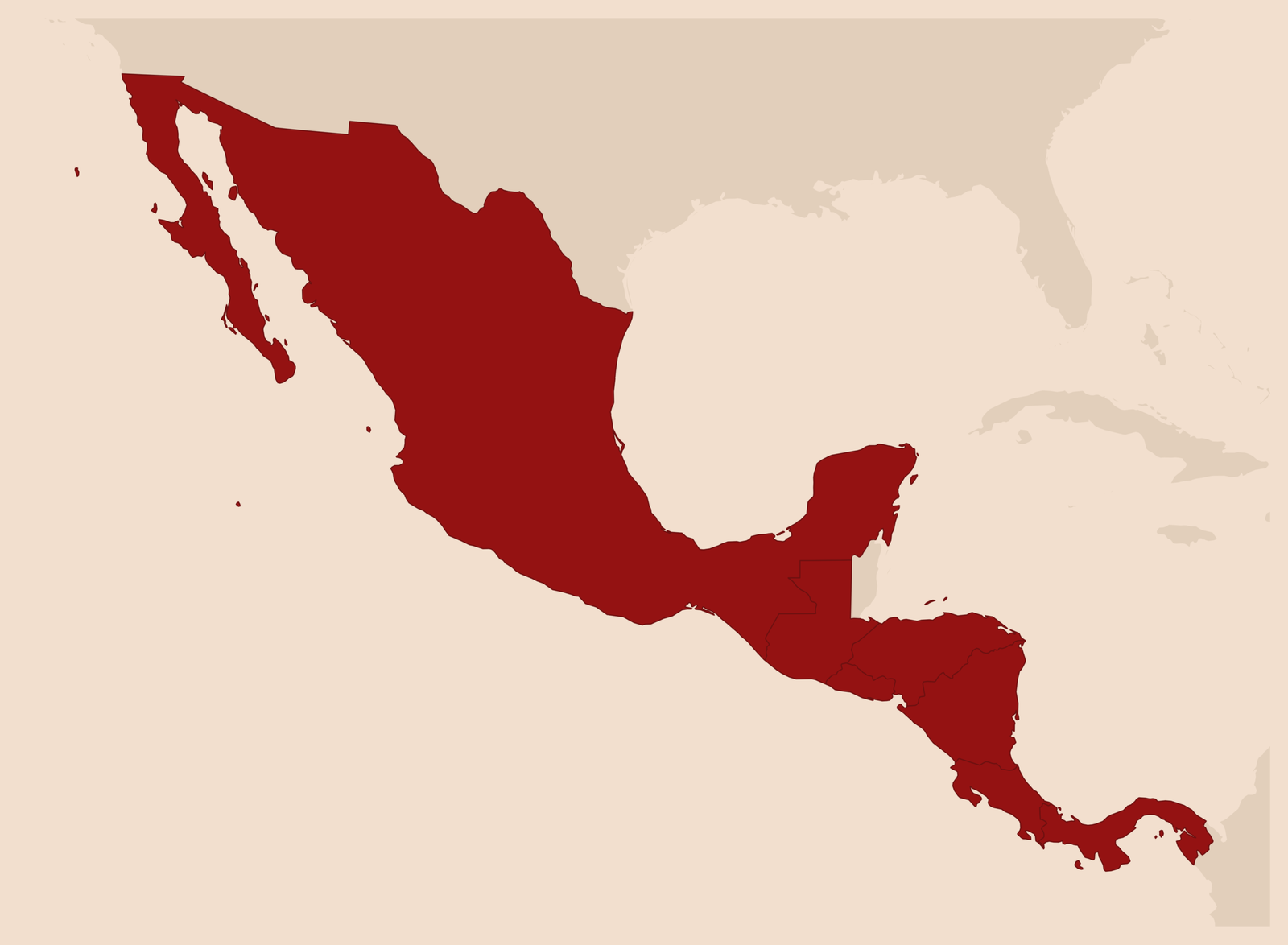
This brief covers the seven countries State Media Monitor maps in Central America and its northern approach: Costa Rica, El Salvador, Guatemala, Honduras, Mexico, Nicaragua, and Panama. Together they hold roughly 182 million people, more than seven in ten of them in Mexico alone. The 35 mapped entries break down into 26 State-Controlled (SC), 4 Independent State-Funded (ISF), 3 Captured Public (CaPu), and 2 Independent State-Funded and Managed (ISFM).
State-Controlled media are the regional default. Six of the seven countries operate at least one SC outlet, and only Costa Rica has none. Two countries, Panama and Nicaragua, have nothing else: every mapped outlet in both is State-Controlled. In Nicaragua that means seven outlets under a single family’s political project; in Panama it means one national broadcaster, SERTV, run as a state entity with no independent counterpart. The SC model in Central America follows the pattern found elsewhere: outlets are owned by the state, funded from the public budget, and directed by people the executive appoints, with no binding editorial firewall.
Mexico shows the model consolidating rather than loosening. It maps the region’s largest state media portfolio, and its recent movement has been toward State-Controlled rather than away from it, with outlets reclassified into SC in 2024 and again in 2026. The country’s size means most of Central America’s state media audience sits inside a system trending toward tighter executive alignment.
Four of the seven countries have at least one fully independent (ISF) outlet: Costa Rica, Mexico, Guatemala, and Honduras. Three have none at all: Panama, El Salvador, and Nicaragua. That is the first significant contrast with Northern Africa, where no independent exception exists anywhere in the region.
The second contrast matters more. Every fully independent outlet in Central America is anchored in an institution that sits outside executive control, and almost all of them are universities. Costa Rica’s independent media belong to the University of Costa Rica. Mexico’s ISF entry is the television and radio service of UNAM, the national autonomous university. Honduras’s independent outlet is the television service of UNAH, its national autonomous university. Guatemala’s TV Maya is governed by the Maya language academy, a state body outside the executive line. Guatemala’s other independent outlet, run by the national university USAC, was removed from the map in 2026.
The pattern is consistent enough to state plainly: in Central America, editorial independence in state media is not produced by broadcasting law, by governance charters, or by public-service mandates. It is inherited from constitutional institutional autonomy that was designed for something else, chiefly the autonomy of public universities. No country in the region has built an independent public broadcaster on purpose. Where full independence exists, it is a by-product.
Mexico’s two ISFM outlets, the national radio institute IMER and the century-old cultural broadcaster Radio Educación, are the partial exception. Both are owned and funded by the federal state and have government-appointed directors, but both retain a demonstrated record of editorial independence and plural programming. They show that professional practice can preserve some independence even inside a weak structure. They also confirm the wider finding: nowhere in the region is there a purpose-built independent public broadcaster protected by a strong legal and institutional firewall.
The category that is conspicuously thin is genuine public-service broadcasting. Captured Public outlets appear in only two countries, Costa Rica and El Salvador, and they illustrate opposite trajectories. Costa Rica’s SINART is a public-service broadcaster whose governance leaves it exposed to political control, sitting alongside a genuinely independent university media group. El Salvador’s two CaPu outlets sit alongside three State-Controlled ones, in a system State Media Monitor describes as the structural opposite of Costa Rica’s.
The distinction between Costa Rica’s independent and captured outlets is instructive. Both are funded by the state. What separates them is governance: who appoints the leadership, and whether that leadership can be removed for editorial reasons. Funding is not the variable that determines independence in this region. Control of appointments is.
Central America contains one of the widest press-freedom ranges of any sub-region in the world. Costa Rica ranks 38th of 180 in the 2026 RSF World Press Freedom Index, one of only four countries in the Americas rated “satisfactory”. Nicaragua ranks 168th, the worst in Latin America for the second consecutive year, below Cuba and Venezuela, in a media landscape RSF describes as being in ruins. That is a gap of 130 places within a single sub-region.
Between those poles the region sorts into bands: one satisfactory (Costa Rica), one problematic (Panama), three difficult (Mexico, Guatemala, Honduras), and two very serious (El Salvador, Nicaragua). Movement in 2026 was mixed. Guatemala and Honduras each climbed ten places, the region’s clearest improvements. Panama fell twelve, the sharpest decline. El Salvador fell eight and has now lost 74 places since Nayib Bukele took office in 2019, a trajectory RSF links to the criminalisation of journalism, including a 2025 foreign agents law that has driven journalists into exile.
Press-freedom rank and state media structure track each other closely, but not perfectly. The three countries with no independent state media at all, Panama, El Salvador, and Nicaragua, occupy the region’s problematic and very serious bands. The country with the region’s only fully independent-plus-captured structure, Costa Rica, is also its press-freedom leader. But Mexico, Guatemala, and Honduras all hold independent or independent-leaning outlets while sitting in the difficult band, which is the useful caution: an autonomous university broadcaster, or an editorially independent state-managed radio service, does not on its own make a country safe for journalists.
| Country | Pop ~M | SMM typology | RSF 2026 | Δ ’25 | Score | Category |
|---|---|---|---|---|---|---|
| Costa Rica | 5.1 | CaPu · ISF | 38 | ▼ 2 | 72.35 | Satisfactory |
| Panama | 4.5 | SC | 65 | ▼ 12 | 62.14 | Problematic |
| Mexico | 130.0 | SC · ISFM · ISF | 122 | n/a | 45.23 | Difficult |
| Guatemala | 18.1 | SC · ISF | 128 | ▲ 10 | 43.21 | Difficult |
| Honduras | 10.6 | SC · ISF | 132 | ▲ 10 | 41.02 | Difficult |
| El Salvador | 6.4 | SC · CaPu | 143 | ▼ 8 | 38.88 | Very serious |
| Nicaragua | 6.9 | SC | 168 | n/a | 24.98 | Very serious |
Citation (cite the article/profile as part of):
Dragomir, M. (2025). State Media Monitor Global Dataset 2025.
Media and Journalism Research Center (MJRC).
Zenodo.
https://doi.org/10.5281/zenodo.17219015
This article/profile is part of the State Media Monitor Global Dataset 2025, a continuously updated dataset published by the Media and Journalism Research Center (MJRC).